
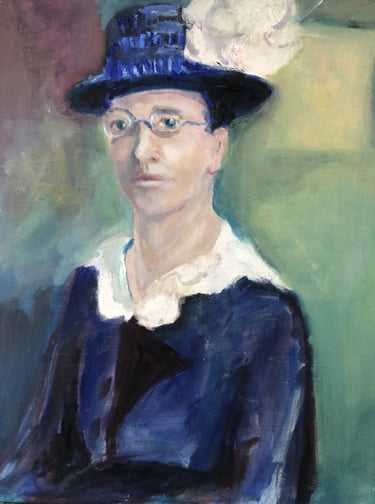
Emily Greene Balch was an American economist, sociologist, and peace activist. She was born on January 8, 1867, in Jamaica Plain, Massachusetts, and died on January 10, 1961, in Cambridge, Massachusetts.
Balch was a co-recipient of the 1946 Nobel Peace Prize, sharing the award with John Raleigh Mott. She was recognized for her decades-long, persistent work on behalf of peace and international cooperation, particularly during and immediately after the World Wars.
She began her career as a professor of economics and sociology at Wellesley College, focusing her research on poverty, immigration, and labor issues. Like her colleague and friend Jane Addams, she was an active figure in the settlement house movement and served on numerous commissions and boards aimed at improving social conditions.
Balch was a dedicated pacifist, and her life took a crucial turn during World War I when she became intensely involved in the international movement to end the conflict. In 1915, she attended the International Congress of Women in The Hague and was one of the founders of the Women's International League for Peace and Freedom (WILPF). She worked closely with Jane Addams in the WILPF, serving as its international secretary for many years. Her strong anti-war stance during the U.S. entry into World War I led to her eventual dismissal from Wellesley College.
Following the war, she dedicated herself entirely to the cause of peace, promoting the work of the League of Nations and advocating for universal disarmament, international law, and human rights. She played a key role in post-World War II planning, advocating for the establishment of the United Nations. Her commitment to achieving peace through social justice and economic equality made her one of the 20th century's most significant, though often unsung, peace activists.
MLA: Emily Greene Balch – Facts. NobelPrize.org. Nobel Prize Outreach 2025. Thu. 4 Dec 2025. <https://www.nobelprize.org/prizes/peace/1946/balch/facts/>
MLA: Emily Greene Balch photo:https://www.shorpy.com/node/9131#:~:text=Washington%2C%20D.C.%2C%20circa%201920.%20%22Miss%20Emily%20Greene,Prize.%20Harris%20&%20Ewing%20Collection%20glass%20negative.