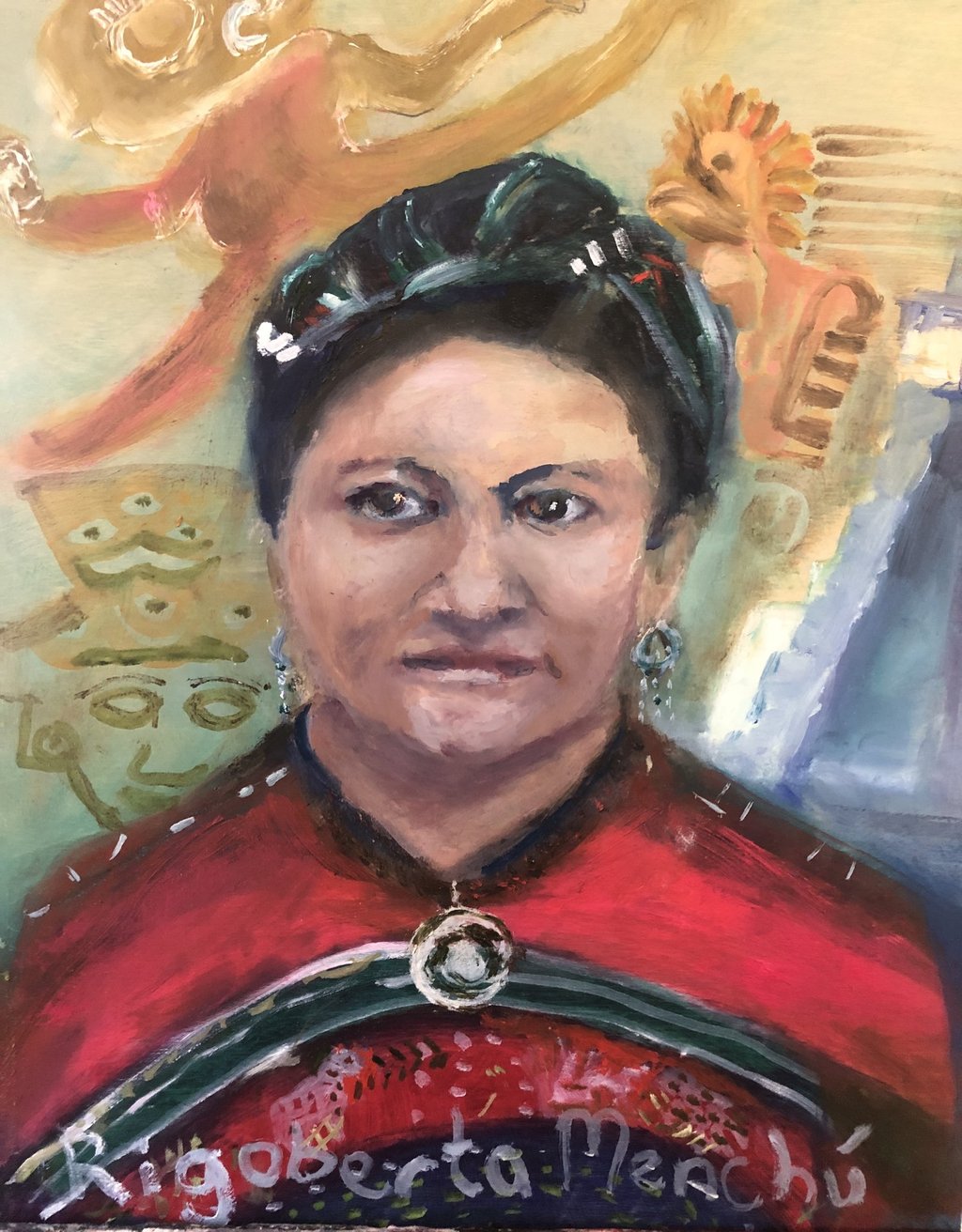
Rigoberta Menchú Tum is a prominent Guatemalan human rights activist and author. Born on January 9, 1959, into a poor K’iche’ Maya peasant family in the highlands of Guatemala, she is currently alive and continues her work for social justice.
Menchú was awarded the Nobel Peace Prize in 1992 for her struggle for social justice and ethno-cultural reconciliation based on respect for the rights of indigenous peoples. The award came at a highly symbolic moment, the 500th anniversary of Christopher Columbus's arrival in the Americas, and helped bring international attention to the historical oppression of the continent's native populations.
Her activism began at a young age, organizing farm workers and becoming involved with Catholic social reform movements to improve the situation of the Maya people, who were enduring severe human rights abuses during Guatemala's long civil war (1960–1996). Her own family paid a terrible price for this work: her mother, father, and brother were all kidnapped, tortured, and murdered by the military, forcing her to flee into exile in Mexico in the early 1980s.
After receiving the Nobel Prize, she returned to Guatemala and established the Rigoberta Menchú Tum Foundation to continue promoting human rights, justice for victims of the conflict, and reconciliation. She remains a powerful global figure and a symbol of hope for indigenous rights and peace across ethnic divides.
MLA style: Rigoberta Menchú Tum – Facts. NobelPrize.org. Nobel Prize Outreach 2025. Thu. 4 Dec 2025. <https://www.nobelprize.org/prizes/peace/1992/tum/facts/>