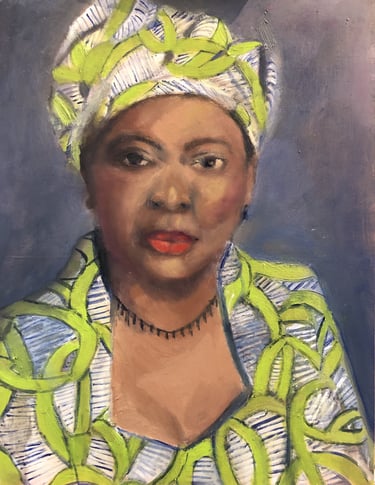
Leymah Gbowee is a Liberian peace activist, social worker, and women's rights advocate. She was born on February 1, 1972, in Monrovia, Liberia, and is currently alive.
Gbowee was a co-recipient of the 2011 Nobel Peace Prize, sharing the award with Ellen Johnson Sirleaf and Tawakkol Karman for "their non-violent struggle for the safety of women and for women's rights to full participation in peace-building work." Her work is most renowned for leading a massive, interfaith women's peace movement that was instrumental in ending Liberia's devastating second civil war in 2003.
Her path to activism began after the start of the civil war in 1989. She trained as a social worker and trauma counselor, working with former child soldiers. Driven by a conviction that women had a responsibility to restore peace, she became a key organizer and spokesperson for the Women of Liberia Mass Action for Peace movement. This unprecedented coalition brought together Christian and Muslim women, dressed in white, to stage non-violent protests, pray-ins, and sit-ins to demand an end to the fighting and reconciliation.
Gbowee's leadership and the pressure from the women's movement successfully forced then-President Charles Taylor to participate in formal peace talks in Ghana. At a critical point when the talks stalled, Gbowee and hundreds of women formed a human barricade around the meeting hall, refusing to let the delegates leave until an agreement was reached. This strategic, non-violent action proved decisive, leading to a peace treaty and paving the way for the country's first free and fair election, which brought Africa's first female head of state, Ellen Johnson Sirleaf, to power. Today, she continues her work through the Gbowee Peace Foundation Africa, focusing on leadership and educational opportunities for women and youth.
MLA: Leymah Gbowee – Facts. NobelPrize.org. Nobel Prize Outreach 2025. Thu. 4 Dec 2025. <https://www.nobelprize.org/prizes/peace/2011/gbowee/facts/>Leymah Gbowee. Photo credit: Michael Angelo